

Monthly Archives

July 2026

Reflux in Babies: Why It’s Common But Not Normal

By | Events | No Comments

Pediatric Chiropractic  |  Ignite Family Chiropractic

Reflux in Babies: Why It’s Common But Not Normal

By Dr. Jen Givens, DC, CACCP  ·  Ignite Family Chiropractic  ·  Peoria, AZ

If your baby spits up after every feed, arches their back when you lay them down, or screams for an hour after eating, you’ve probably already heard the same thing from more than one person: reflux is just part of having a baby.

It is common. We are not going to tell you otherwise.

But common and normal are not the same thing.

What Causes Reflux In Babies

Most parents are told reflux is purely digestive. Sometimes that’s true. But very often, what looks like a digestive problem is actually a sign of stress in your baby’s nervous system.

Birth is intense, even when it goes smoothly. The pressure of delivery, whether vaginal or cesarean, can create tension in a newborn’s upper cervical spine and nervous system. When that tension is present, your baby’s body can get stuck in a fight or flight state.

A baby in fight or flight cannot digest well. That stress shows up as reflux, as colic, as a baby who seems tense, who startles easily, and who struggles to settle no matter what you try.

Signs Reflux May Be Connected To Nervous System Stress

  • Spitting up after most or every feed
  • Needing to be held upright for thirty minutes or more after eating
  • Arching or stiffening when laid flat
  • Difficulty sleeping unless upright or held
  • A baby who seems tense, stiff, or like “a board” when picked up

If several of these sound familiar, the tension theory is worth exploring before assuming this is simply something to wait out.

What Most Parents Have Already Tried

By the time families come to see us, they’ve usually already tried quite a bit. Switching formulas. Cutting dairy, soy, gluten, or eggs from a breastfeeding diet. Sleeping on an incline. Medication from the pediatrician. Reducing feeding amounts. Burping more during feeds.

None of those approaches are wrong to try. But if reflux is rooted in nervous system stress rather than purely digestive causes, those approaches will only go so far.

How Pediatric Chiropractic Helps

Gentle, specific pediatric chiropractic care is designed to release tension in the upper cervical spine and calm an overactive stress response. When that tension resolves, the nervous system can shift out of fight or flight and back into a state where digestion, sleep, and comfort become possible again.

This is not a forceful adjustment. The pressure used with infants is no more than you’d use to test the ripeness of a peach.

You Are Not Doing Anything Wrong

If you’re exhausted, changing your clothes multiple times a day, and feel like you’ve tried everything, please hear this clearly: this is not your fault. It’s also not something you have to simply wait out for months.

If your baby is dealing with reflux that doesn’t seem to be improving, we’d love to take a look.

Gentle, specific pediatric chiropractic care for babies in Peoria, Arizona.
Book Your Baby’s First Visit

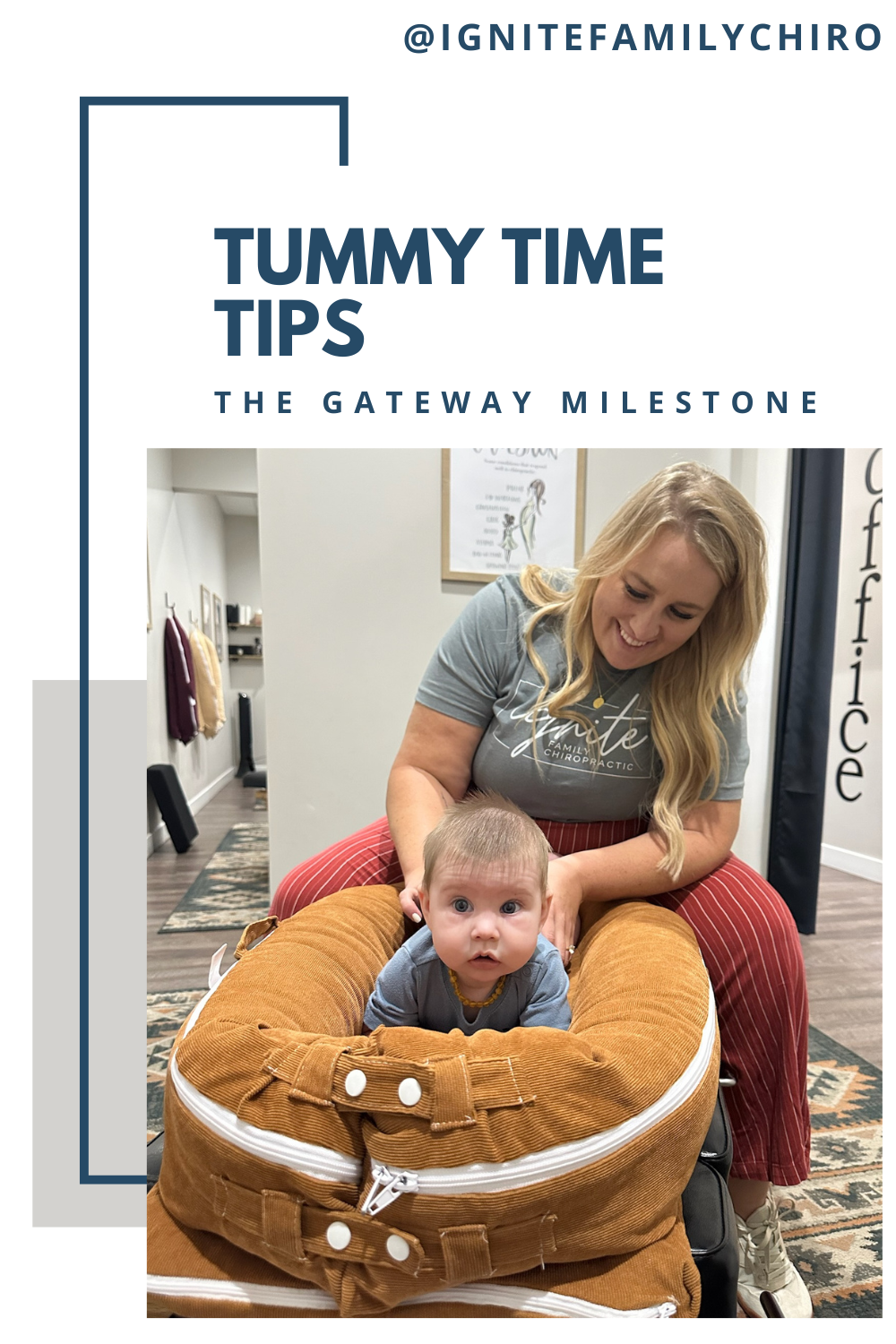
Tummy Time Tips: The Gateway Milestone

By | Events | No Comments

Pediatric Milestones  |  Ignite Family Chiropractic

Tummy Time Tips: The Gateway Milestone

By Dr. Jen Givens, DC, CACCP  ·  Ignite Family Chiropractic  ·  Peoria, AZ

If tummy time feels like a daily battle in your house, you’re far from alone. It’s also one of the most important things you can prioritize in those early months.

Why Tummy Time Is Called The Gateway Milestone

Nearly every major physical milestone that follows, rolling, crawling, sitting, and eventually walking, builds on the strength and movement patterns your baby develops during tummy time. When tummy time is skipped or minimized, the milestones that follow often show up later or with altered patterns.

When To Start

Start now, regardless of your baby’s age. There’s no perfect starting point you’ve missed. The earlier and more consistently tummy time happens, the more naturally those later milestones tend to unfold.

Tips That Actually Help

  1. Use entertaining toys and faces to keep your baby engaged and motivated to lift and turn their head.
  2. Try tummy time on different surfaces. The floor, a play mat, across your lap, and on your chest all offer slightly different sensory input.
  3. Aim for a simple ratio to keep in mind: for every hour your baby spends in a car seat, aim for an equal hour of tummy time across the day.

1 Hour Car Seat

1 Hour Tummy Time

What If Your Baby Hates It

Some resistance to tummy time is common. Significant resistance, where your baby cries immediately, strongly prefers turning one direction, or seems stiff and uncomfortable, can be a sign of underlying tension rather than simple dislike.

This is also where checking for ties, whether your baby has been evaluated for a lip or tongue tie, becomes relevant. Ties can affect more than feeding. They can influence comfort during tummy time as well.

Setting Your Baby Up For Success

A few supportive tools can make tummy time more comfortable in the early weeks:

  • A Dock-a-Tot or Boppy pillow
  • Directly against your chest
  • Across your lap
  • On the floor

The Bigger Picture

We love the concept of building a baby from the ground up, allowing baby-led development to unfold naturally rather than skipping ahead with devices like sitting or standing equipment that are often marketed to age groups not developmentally ready for them.

Movement development happens in sequence. When that sequence gets skewed or skipped, altered patterns are more likely to show up later, things like crawling in unusual patterns, walking before crawling, or persistent toe walking.

When To Reach Out

If your baby strongly resists tummy time, will only turn one direction, or you’re noticing delays in rolling or crawling compared to expected timelines, it’s worth having their nervous system and spine evaluated.

Gentle, specific pediatric chiropractic care for babies in Peoria, Arizona.

Book Your Baby’s First Visit

Baby Fevers: When To Worry and When Not To

By | Events | No Comments

Pediatric Wellness  |  Ignite Family Chiropractic

Baby Fevers: When To Worry and When Not To

By Dr. Jen Givens, DC, CACCP  ·  Ignite Family Chiropractic  ·  Peoria, AZ

Few things send a parent into panic faster than a hot forehead at 2 a.m. Before you reach for medication or head to urgent care, it helps to understand what a fever is actually doing.

Fevers Are Not The Enemy

At this stage, fever is one of your baby’s only immune defenses. A fever helps kill germs and allows the body to heal itself, often without needing unnecessary medication. A fever that runs its course typically helps your child fight off infection more effectively and emerge stronger on the other side.

That doesn’t mean every fever should be ignored. It means most fevers are doing exactly what they’re supposed to do.

Fever Ranges To Know

Low Grade 100.4° – 102.2°

Moderate Grade 102.2° – 104.0°

High Grade 104.0° – 107.6°

Seek medical attention immediately for any fever over 104°

Things To Remember During A Fever

  • Tiredness and nausea are normal during a fever and don’t necessarily signal something more serious
  • Let your baby sleep. Rest supports the healing process
  • Continue monitoring temperature and overall demeanor, not just the number on the thermometer
  • Temperatures are typically highest at night and should begin declining within twelve hours

Bacterial vs. Viral Patterns

A fever that stays at a fairly constant low grade is more often associated with a bacterial process. A fever with noticeable up and down spikes throughout the day is more often viral. This is general guidance, not a diagnostic tool, but it can help you describe the pattern accurately if you do need to call your pediatrician.

What To Focus On

Comforting your baby matters more than aggressively trying to reduce the number on the thermometer.

Staying hydrated matters. And for many families, keeping up with chiropractic adjustments during fevers, teething, or congestion can support the nervous system’s ability to manage these immune responses well.

When To Be Concerned

While most fevers are simply the immune system doing its job, always trust your instincts and contact your pediatrician with any concerns, especially in infants under three months, or with any fever exceeding 106 degrees.

If your baby tends to run frequent fevers, struggles with recurring ear or sinus congestion, or you simply want extra support keeping their nervous system functioning well through these phases, we’re here for that.

Gentle, specific pediatric chiropractic care for babies in Peoria, Arizona.

Book Your Visit

Cranial Shape in Babies: Chiropractic vs Helmets

By | Events | No Comments

Pediatric Chiropractic  |  Ignite Family Chiropractic

Cranial Shape in Babies: Chiropractic vs. Helmet

By Dr. Jen Givens, DC, CACCP  ·  Ignite Family Chiropractic  ·  Peoria, AZ

A flat spot on the back of your baby’s head. A preference for looking only one direction. One eye that seems slightly more forward than the other in pictures.

If you’ve noticed any of this, you’re not imagining it, and you’re not overreacting.

Proper Cranial Shape Is More Than Cosmetic

It’s easy to assume a flat spot is purely an appearance issue. It’s not. Cranial shape is a brain-based developmental concern, not simply a cosmetic one. The shape of a baby’s skull reflects how freely they’ve been able to move their head and neck in those early months.

What Increases the Risk

Certain factors make cranial flattening more likely:

  • Torticollis, or tightness and preference in the neck
  • Asymmetrical facial features
  • A strong preference for turning the head one direction
  • Past nursing or latch difficulties
  • Cesarean birth

Almost all of these connect back to the same root cause: tension in the neck that limits a baby’s ability to turn freely in both directions.

Why the Flat Spot Is a Symptom, Not the Problem

When a baby has tightness in the upper cervical spine, often from the birth process itself, they tend to favor one side. They sleep with their head turned the same direction every night. They resist tummy time. They may struggle to latch on one side. Because they’re always positioned the same way, pressure builds in the same spot on the skull, and that’s where the flattening develops.

The flat spot is not the core issue. The tight neck causing the preference is.

Chiropractic Care Versus a Helmet

Pediatricians often recommend waiting until around six months to evaluate for a helmet. Helmets work by gently reshaping the skull from the outside over time.

Pediatric chiropractic care works differently:


Chiropractic Care Addresses the underlying tension in the neck, allowing your baby to move freely in both directions. When the preference resolves, pressure on the skull equalizes and the head shape often has the opportunity to correct itself.

Helmet Reshapes the skull from the outside over time. Typically considered starting around six months, once natural correction has had less opportunity to occur.

The earlier this is addressed, the more responsive a baby’s skull tends to be, since the bones are still soft and adaptable in those first several months.

What To Watch For

  • A flat spot on one side of the head
  • Strong preference for looking one direction
  • Resistance to tummy time
  • Difficulty latching on one side
  • Stiffness or what feels like a “stuck” neck

You Have Options Before a Helmet

If your pediatrician has mentioned a flat spot, or you’ve simply noticed it yourself, it’s worth having your baby’s neck evaluated before assuming a helmet is the only path forward.


Gentle, specific pediatric chiropractic care for babies in Peoria, Arizona.

Book Your Baby’s Evaluation